
How to Create Custom ESL Worksheets for Your Classroom
How to Create Custom ESL Worksheets for Your Classroom
Ready-made materials save time, but nothing beats a worksheet crafted specifically for your learners. Custom resources let you address niche interests, scaffold tricky grammar, and align perfectly with your lesson objectives.
This guide outlines a practical design workflow—from analyzing needs to polishing visuals—so you can produce professional worksheets without burning hours each week.
Assess Student Needs First
Great worksheets begin with insight. Interview students, review past work, and study assessment data to understand proficiency levels, interests, and learning goals. Note cultural references to include or avoid, and identify skills that need extra reinforcement.
Select the Right Format
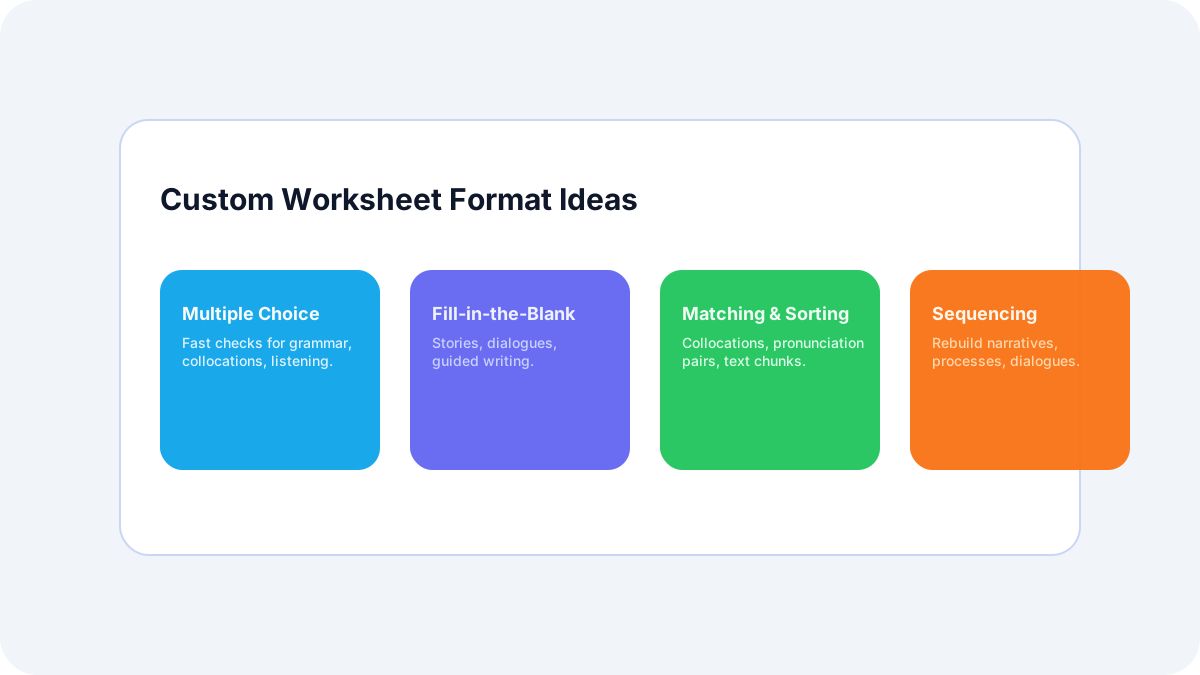
Choose a structure that aligns with the language target and the kind of thinking you want to encourage.
- Multiple choice: Efficient for quick checks of vocabulary, collocations, or reading comprehension.
- Fill-in-the-blank: Ideal for grammar practice within short narratives or dialogues.
- Matching and sorting: Perfect for collocations, function practice, or pronunciation contrasts.
- Sequencing and ordering: Help learners reconstruct stories, processes, or dialogues for fluency.
Design Engaging Content
Layer relevance and variety into your worksheets to keep students motivated.
- Use real-world examples: Draw inspiration from learner industries, hobbies, or local events.
- Add visuals: Icons, screenshots, and quick sketches clarify meaning and support visual learners.
- Gamify selectively: Add score trackers, challenge boxes, or choice-based paths for extra excitement.
Toolbox for Fast Creation
Equip yourself with tools that balance ease of use and design flexibility.
- Canva: Drag-and-drop layouts, icons, and fonts tailor-made for educators.
- Google Docs or Slides: Collaborative editing, commenting, and version history in the cloud.
- Worksheet generators: Speed up word searches, crosswords, and gap-fill creation when time is tight.
Video: How to Create Your Own ESL Worksheets
Test and Iterate
Pilot new worksheets with a colleague or a small group. Watch for timing issues, ambiguous instructions, or sections that need extra scaffolding. Collect feedback and log edits so future revisions are fast.
Ready to Publish
- Build a template library: reuse consistent headers, fonts, and instruction styles.
- Create answer keys: support independent study and quick peer-check routines.
- Store versions by level: maintain beginner, intermediate, and advanced adaptations in one folder.
Related hub
Where adult worksheets live
Once you've created or customized your materials, the adult ESL worksheets hub helps you organize them by level, topic, and teaching goal — printable PDFs, workplace English, and 30+ classroom-tested guides.
Open the adult worksheets hub →Get the Latest ESL Resources
Join ESL teachers who receive our weekly newsletter with lesson plans, activities, and teaching tips.
Subscribe Now →Frequently Asked Questions
- Detail level depends on your experience and institutional requirements. New teachers benefit from detailed plans including timing, transitions, and potential problems. Experienced teachers might use bullet points. Always include clear objectives, materials list, and assessment methods.
- Stay flexible! Have backup activities ready and be prepared to adjust on the fly. If students are struggling, slow down and add more practice. If they're finding it too easy, skip ahead or add challenge activities. Always prioritize student needs over sticking to the plan.
- Plan at least one week ahead for daily lessons, with rough outlines for the month. This allows you to ensure progression and prepare materials while staying flexible enough to respond to student needs and interests that arise during lessons.
How detailed should my lesson plans be? ▼
What should I do if my lesson plan isn't working during class? ▼
How far in advance should I plan lessons? ▼
Related Articles
- → The Essential Blueprint: Understanding Lesson Plans and Their Profound Importance in Education
Explore the critical role of lesson plans in education, from providing clarity and enhancing efficiency to facilitating differentiation and promoting teacher reflection. Discover their essential components and why they are vital for effective teaching and student success.
- → Can Lesson Plans Improve Student Engagement? A Comprehensive Analysis
A deep dive into how strategic lesson planning directly impacts student engagement, motivation, and participation. Discover the core elements and design principles that transform a simple plan into a powerful tool for creating a dynamic and effective learning environment.
- → The Ultimate Guide to ESL Brains Lesson Planning in 2025
Master lesson planning with ESL Brains and deliver engaging, effective classes every time. This guide covers the key steps, new features for 2025, and best practices for ESL teachers looking to streamline preparation and boost student engagement.
- → ESL Curriculum for Adults: Ready-to-Use Lesson Plans & Materials
Transform your adult ESL classes with lesson plans designed for real-life communication and rapid progress. This guide covers everything from needs analysis to assessment for adult learners.
New to ESL Teaching?
Check out our comprehensive glossary of ESL teaching terms and concepts.
Browse ESL Glossary →